
Introduction
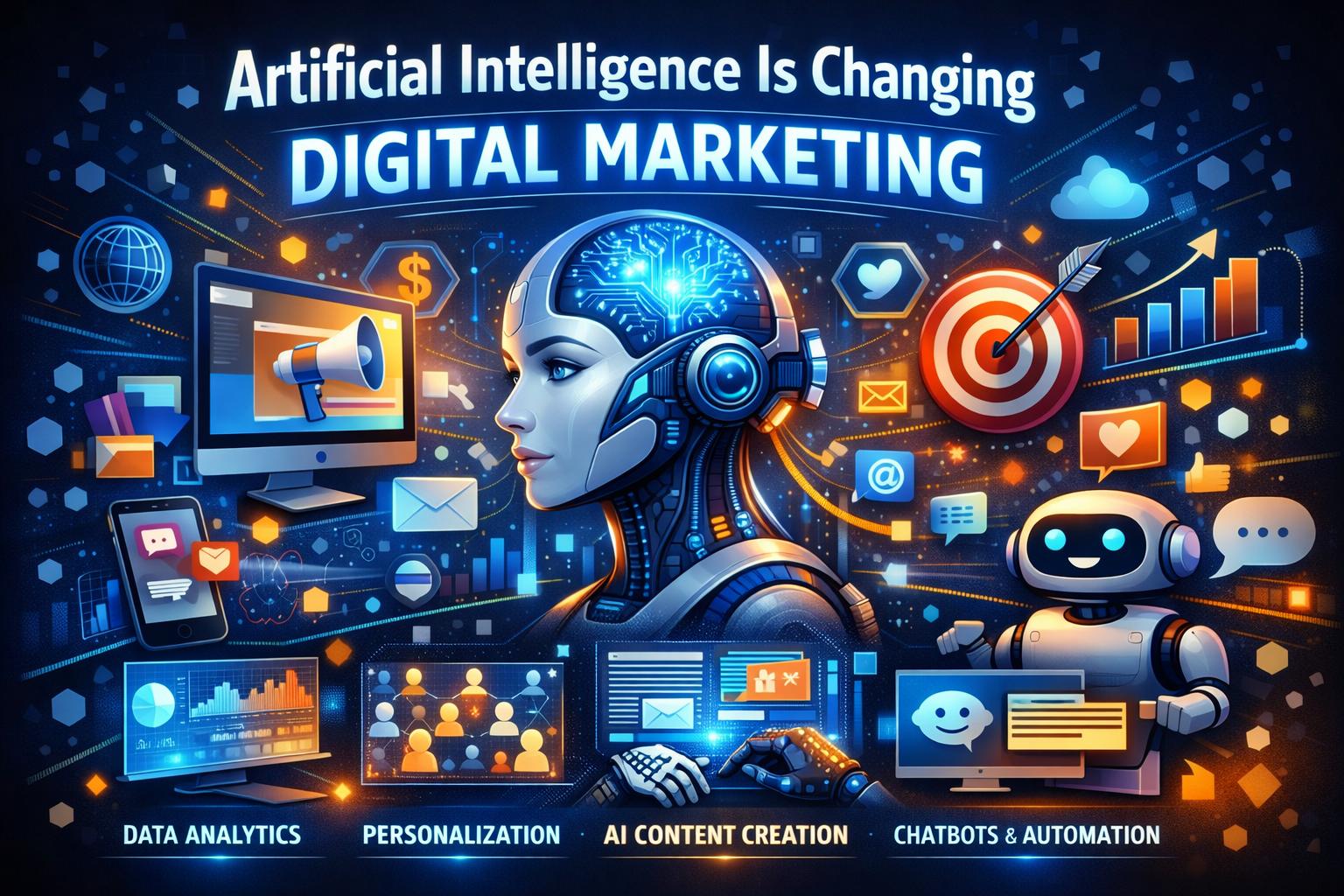
Technology continues to transform the way businesses promote their products and connect with customers. One of the biggest innovations in recent years is artificial intelligence. Understanding how artificial intelligence is changing digital marketing helps businesses improve their strategies, automate tasks, and deliver better customer experiences.
Artificial intelligence (AI) allows marketers to analyze large amounts of data, predict customer behavior, and create more personalized marketing campaigns.
What Is Artificial Intelligence in Digital Marketing?
Artificial intelligence refers to computer systems that can perform tasks that normally require human intelligence. These systems can analyze data, recognize patterns, and make decisions based on information.
In marketing, AI helps businesses:
- Analyze customer behavior
- Automate marketing tasks
- Improve targeting and personalization
- Optimize advertising campaigns
Because of these abilities, how artificial intelligence is changing digital marketing has become an important topic for businesses worldwide.
AI Improves Customer Data Analysis
One of the biggest advantages of AI is its ability to analyze large amounts of data quickly. Businesses collect data from websites, social media platforms, and customer interactions.
AI tools can help marketers:
- Identify customer preferences
- Predict buying behavior
- Understand market trends
- Improve marketing strategies
Better data analysis helps businesses make smarter marketing decisions.
Personalized Marketing Experiences
Customers expect personalized experiences when interacting with brands online. AI allows businesses to deliver tailored content based on user behavior and interests.
Examples include:
- Personalized product recommendations
- Customized email campaigns
- Targeted online advertisements
- Dynamic website content
Personalization is a major reason how artificial intelligence is changing digital marketing is becoming so important.

Marketing Automation
AI-powered automation tools help marketers complete repetitive tasks faster and more efficiently.
Common automated tasks include:
- Email marketing campaigns
- Social media scheduling
- Customer segmentation
- Ad campaign optimization
Automation saves time and allows marketing teams to focus on strategy and creativity.
AI-Powered Chatbots and Customer Support
Many businesses now use AI chatbots to provide instant customer support on websites and social media platforms.
Chatbots can:
- Answer common questions
- Guide customers through purchases
- Provide product recommendations
- Offer 24/7 customer support
These tools improve customer experience and increase engagement.
Better Advertising Targeting
Artificial intelligence helps businesses target the right audience with their advertising campaigns. AI systems analyze user behavior and interests to deliver relevant ads.
Benefits include:
- Higher ad engagement
- Improved conversion rates
- Reduced advertising costs
- Better return on investment
This advanced targeting demonstrates how artificial intelligence is changing digital marketing strategies.
Better Advertising Targeting
Artificial intelligence helps businesses target the right audience with their advertising campaigns. AI systems analyze user behavior and interests to deliver relevant ads.
Benefits include:
- Higher ad engagement
- Improved conversion rates
- Reduced advertising costs
- Better return on investment
This advanced targeting demonstrates how artificial intelligence is changing digital marketing strategies.
Challenges of AI in Digital Marketing
Although AI offers many advantages, businesses must also consider potential challenges.
Some challenges include:
- High implementation costs
- Data privacy concerns
- Dependence on technology
- Need for skilled professionals
Understanding these challenges helps businesses use AI responsibly and effectively.
The Future of AI in Digital Marketing
Artificial intelligence will continue to evolve and play a larger role in marketing strategies. Businesses that adopt AI technologies early can gain a competitive advantage in the digital marketplace.
Future developments may include:
- More advanced personalization
- Smarter marketing automation
- Improved predictive analytics
- Enhanced customer experiences
Positives and Negatives of How Artificial Intelligence Is Changing Digital Marketing
Positives
1. Better Data Analysis
Artificial intelligence can analyze large amounts of data quickly, helping businesses understand customer behavior and market trends.
2. Improved Personalization
AI allows marketers to create personalized content, product recommendations, and targeted advertisements.
3. Marketing Automation
AI tools can automate repetitive tasks such as email marketing, social media posting, and campaign management.
4. Higher Marketing Efficiency
Businesses can optimize marketing campaigns and improve results using AI-powered insights.
5. Better Customer Experience
AI chatbots and support systems provide faster responses and 24/7 customer service.

Negatives
1. High Implementation Costs
Some AI tools and technologies can be expensive for small businesses.
2. Data Privacy Concerns
AI relies heavily on customer data, which raises concerns about privacy and data protection.
3. Dependence on Technology
Over-reliance on AI tools may reduce human creativity and personal interaction.
4. Requires Technical Knowledge
Businesses may need trained professionals to manage AI marketing systems.
5. Risk of Inaccurate Data
If AI systems use poor-quality data, marketing decisions may become less effective.

Conclusion
Artificial intelligence is transforming the digital marketing landscape. From data analysis and personalized marketing to automation and advertising optimization, AI helps businesses improve efficiency and connect with customers more effectively.
Understanding how artificial intelligence is changing digital marketing allows businesses to stay competitive and take advantage of new opportunities in the evolving digital world.
Leave a Reply